
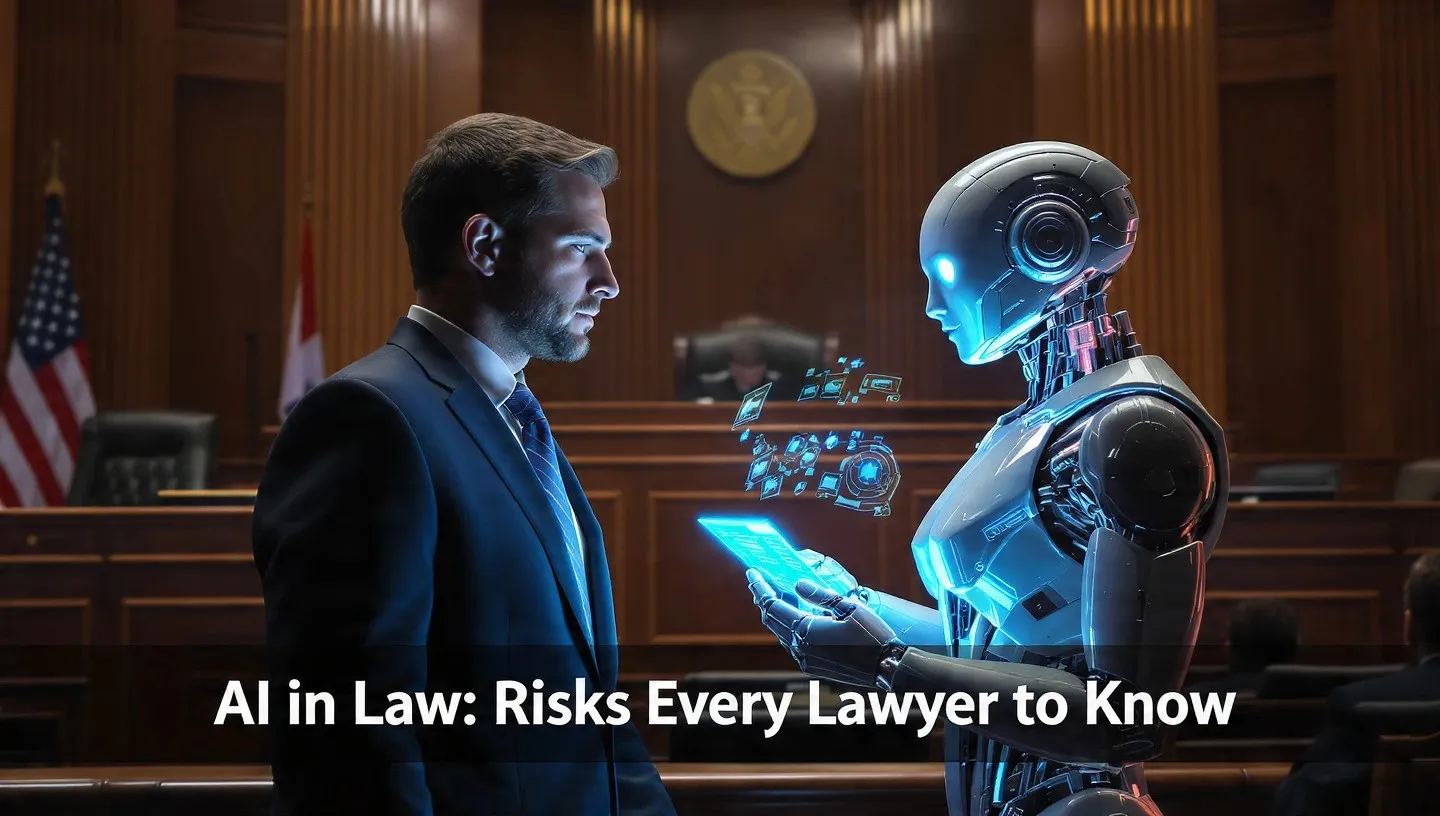
AI in Law: Real Problems Lawyers in the USA Are Facing Today
Artificial intelligence is quickly becoming part of everyday legal work in the United States. What once sounded like science fiction—machines helping lawyers build cases—is now happening inside law firms, courtrooms, and legal departments across the country.
But while AI tools promise faster research, cheaper services, and increased productivity, they are also creating real problems for lawyers, judges, and clients. Over the past year especially, the legal world has started realizing that AI is powerful—but far from perfect.
Many attorneys initially saw AI as a helpful assistant. However, recent court cases, professional warnings, and embarrassing legal mistakes have forced the industry to slow down and ask an important question:
Are lawyers using AI responsibly?
In this article, we’ll explore the real challenges AI is creating in the U.S. legal system, why courts are concerned, and what the future might look like for lawyers working alongside artificial intelligence.
The Rapid Growth of AI in Law Firms
Today, many lawyers use AI for:
Searching legal databases
Drafting contracts
Summarizing case law
Reviewing evidence in large lawsuits
Predicting possible case outcomes
In large firms, technology teams are actively testing new AI platforms every month. Some corporate law departments even expect their outside lawyers to use AI to reduce costs.
From a business perspective, the appeal is obvious. Faster work means more clients and lower expenses.
But the legal profession is not like most industries. In law, accuracy matters more than speed.
A small mistake can change the outcome of a case.
When AI Gets the Law Wrong
One of the biggest issues with AI is something researchers call hallucination. This is when an AI system confidently generates information that is simply not true.
In normal situations—like writing marketing content—that may not be a disaster. In legal work, however, it can be extremely serious.
There have already been cases in U.S. courts where attorneys submitted legal documents containing court decisions that never existed. The lawyers had relied on AI tools to find supporting cases but failed to double-check the results.
Judges were not impressed.
In some situations, lawyers were fined or publicly criticized by courts. The message from the judiciary has been clear: technology is not an excuse for sloppy legal work.
Lawyers are still responsible for everything they submit.
For many in the profession, this moment was a wake-up call.
The Ethical Questions Nobody Expected
When AI first entered the legal industry, most discussions focused on efficiency. But now the conversation has shifted toward ethics.
Legal ethics rules require attorneys to protect client information and provide competent representation. AI raises difficult questions on both fronts.
For example, if a lawyer uploads confidential client documents into an AI system, where does that data go? Is it stored? Could it be used to train future models?
These are not hypothetical concerns. Many law firms are now banning the use of public AI tools for sensitive work until clearer policies exist.
Professional organizations such as the American Bar Association have begun studying how AI fits within existing ethical rules for lawyers.
The reality is that the legal system was never designed with artificial intelligence in mind.
Now it must adapt.
Why Judges Are Starting to Pay Attention
Courts in the United States are becoming increasingly aware of AI’s influence on legal filings.
Some judges have already introduced requirements that attorneys confirm any AI-generated material has been carefully reviewed by a human.
This is not about banning technology. Most judges understand that tools evolve. Lawyers once resisted online legal databases too.
The difference with AI is that it can produce answers that look convincing but are completely fabricated.
That is a dangerous combination in a courtroom where facts and precedent are everything.
As a result, courts are trying to send a signal early: innovation is welcome, but responsibility comes first.
A Quiet Concern Inside Law Firms
Privately, many experienced attorneys admit they are both impressed by AI and uneasy about it.
Senior lawyers often say the same thing: the danger is not the technology itself—it is how people use it.
Young attorneys under pressure to work quickly may be tempted to rely too heavily on automated summaries rather than reading full court opinions. That shortcut can lead to misunderstandings of the law.
Law has always required careful thinking and deep analysis. AI can assist with the process, but it cannot replace professional judgment.
Some law firms are now training lawyers on how not to misuse AI, which is something few expected just a few years ago.
Data Privacy Is Becoming a Major Issue
Another serious concern involves data security.
Legal work often includes extremely sensitive information:
Business trade secrets
Financial records
Personal histories
Medical documents
Government investigations
If that information is entered into AI platforms without proper safeguards, the consequences could be severe.
Because of this, some firms are investing in private AI systems that run internally rather than relying on public tools.
The goal is simple: enjoy the benefits of automation without risking client confidentiality.
Still, building secure AI systems is expensive, which creates a gap between large firms and smaller practices.
Bias and Fairness in AI Legal Tools

Beyond mistakes and privacy issues, AI introduces another complex problem: bias.
Artificial intelligence learns from existing data. If the data reflects historical inequalities or biased outcomes, the AI may unintentionally repeat those patterns.
In legal contexts, this could affect:
Risk assessment tools
Bail evaluations
Case predictions
While AI is not making final decisions in most courts, its influence is growing. That means ensuring fairness in these systems will become increasingly important.
Many legal scholars believe transparency in AI systems will be necessary to maintain trust in the justice system.
Why Some Lawyers Are Still Excited About AI
Despite all the concerns, not everyone in the legal world is pessimistic about AI. In fact, many lawyers believe the technology could ultimately make legal services more accessible.
Legal help in the United States is expensive. Millions of people face legal problems every year without being able to afford a lawyer.
AI tools could help by:
Simplifying legal documents
Explaining rights in plain language
Helping people prepare basic filings
Reducing research costs for attorneys
If used responsibly, AI might actually close the justice gap rather than widen it.
But reaching that point will require careful oversight.
The Regulatory Puzzle
One challenge regulators face is that technology moves faster than the law.
Bar associations, courts, and lawmakers are all trying to understand how AI should be regulated in legal practice.
Some key questions include:
Should lawyers disclose when they use AI in legal work?
Who is responsible when AI tools make mistakes?
Should AI legal software be certified or approved?
How should client data be protected?
These questions do not yet have clear answers.
However, discussions are happening across the country, and new rules are likely to emerge over the next few years.
The Future Lawyer May Work With AI Every Day
It is increasingly clear that AI will become a permanent part of the legal profession.
Future lawyers may start their day by reviewing AI-generated research summaries, analyzing documents flagged by machine learning tools, and drafting contracts with automated assistance.
But the human role will remain critical.
Lawyers do more than process information. They interpret laws, negotiate conflicts, advise clients, and exercise judgment.
No algorithm can replace those skills.
The most successful attorneys in the future will likely be those who understand both law and technology.
Practical Advice for Lawyers Using AI

For legal professionals experimenting with AI tools, a few practical habits can prevent serious problems:
Always verify sources
Never assume AI-generated citations are accurate.
Treat AI as a research assistant
Use it to start the process, not finish it.
Protect client information
Avoid uploading sensitive data to unsecured systems.
Stay informed about ethical guidance
Legal organizations are continually updating recommendations.
Maintain professional responsibility
Technology can assist lawyers, but it cannot replace accountability.
Final Thoughts
Artificial intelligence is changing the legal profession faster than many expected. While the technology offers real advantages, it also exposes weaknesses in how the legal system interacts with digital tools.
Recent incidents involving AI mistakes have reminded lawyers of something fundamental: the practice of law ultimately depends on human judgment.
Technology may help lawyers work faster, but justice still requires careful thinking, ethical responsibility, and accountability.
AI will likely become a powerful partner in the legal world—but it cannot replace the lawyer behind the keyboard.