

How Much Is a Lawyer Consultation? USA Legal Fee Guide
If you have a legal problem, one of the first questions you may ask is, how much is a lawyer consultation? The answer depends on the lawyer, location, type of legal matter, and whether the initial meeting is free or paid.
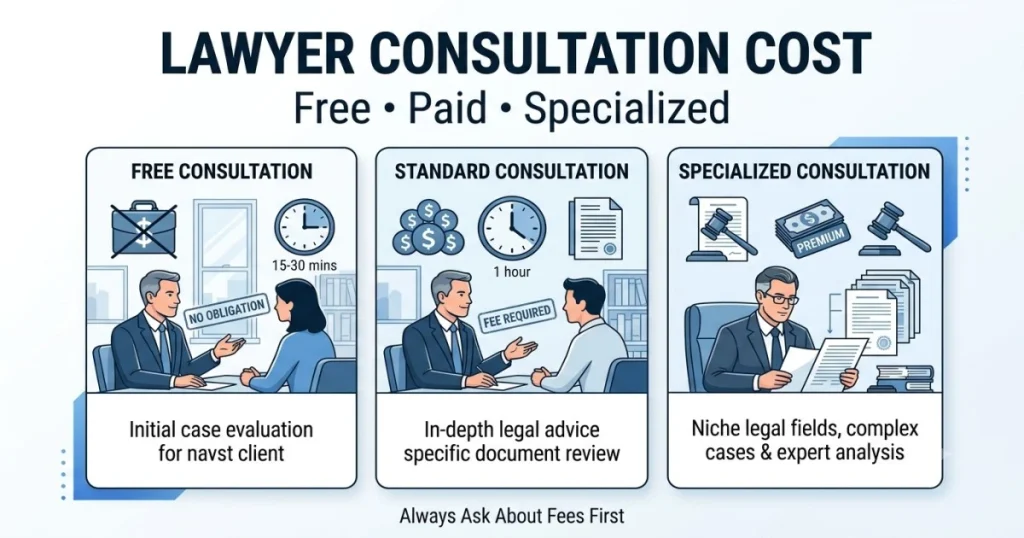
A consultation can cost anywhere from $0 to several hundred dollars, depending on the circumstances. Some attorneys offer a free initial consultation, while others charge a flat consultation fee or bill by the hour.
The good news is that you do not always need to spend a lot of money just to understand your legal options. Knowing how lawyers charge can help you compare attorneys, avoid unexpected bills, and choose the right type of legal help.
This guide explains lawyer consultation fees in the United States, what you can expect during a first meeting, and practical ways to keep your legal costs under control.
How Much Is a Lawyer Consultation?
There is no single standard fee for a lawyer consultation in the United States. Attorneys set their own rates based on factors such as experience, practice area, location, and the complexity of the issue.
A basic consultation may be free, while a paid meeting could cost roughly $100 to $500 or more. Highly specialized attorneys or lawyers in expensive legal markets may charge higher rates.
Here is a general example:
| Consultation Type | Common Cost Range |
|---|---|
| Free initial consultation | $0 |
| Short phone consultation | $50–$200+ |
| Standard paid consultation | $100–$500+ |
| Specialized legal consultation | $250–$1,000+ |
| Hourly legal work after consultation | Varies widely |
These figures are only general examples. A lawyer may charge less or considerably more.
The best approach is to ask about the consultation fee before scheduling the appointment.
Why Some Lawyers Offer Free Consultations
Free consultations are common in certain practice areas, particularly cases where the attorney may receive a fee only if the client recovers money.
Personal injury lawyers, for example, may offer a free initial consultation and work under a contingency fee arrangement. In that situation, the lawyer generally receives an agreed percentage of a recovery rather than charging the client for every hour worked.
However, a free consultation does not necessarily mean the entire legal case will be free.
Always ask what happens after the initial meeting.
What Determines the Cost of a Lawyer Consultation?
Several factors can affect the price you pay.
1. Type of Legal Matter
Legal issues are not all equally complex.
A simple landlord-tenant question may require less time than a complicated business dispute involving contracts, financial records, and multiple parties.
Common areas of law include:
- Family law
- Criminal defense
- Personal injury
- Immigration
- Estate planning
- Employment law
- Business law
- Real estate law
- Bankruptcy
- Civil litigation
Some practice areas are more likely to offer free consultations, while others commonly charge for the lawyer’s time.
2. Lawyer’s Experience
An attorney with decades of experience in a specialized field may charge more than someone with fewer years of practice.
Higher fees do not automatically mean a lawyer is better. What matters is whether the attorney has relevant experience with cases similar to yours.
For example, if you have a complicated business dispute, an attorney who regularly handles business litigation may be more useful than a general practice lawyer with a lower hourly rate.
3. Geographic Location
Attorney fees can vary significantly between different parts of the country.
Lawyers practicing in major metropolitan areas may have higher overhead expenses and higher hourly rates than lawyers in smaller communities.
Your local market can therefore influence both the consultation price and the overall legal fee.
4. Length of the Meeting
A 15-minute phone call and a two-hour document review are not equivalent services.
Some lawyers charge a fixed amount for a specific consultation period. Others charge their normal hourly rate and bill according to the time spent.
Before the meeting, ask:
- How long is the consultation?
- Is the fee flat or hourly?
- Does document review count as billable time?
- Is there a minimum charge?
- Will follow-up questions cost extra?
Getting these answers in advance can prevent surprises.
Free vs. Paid Lawyer Consultations
Both options can be useful.
Free Consultation
A free consultation can be a good starting point if you want to determine whether you potentially have a case and whether the attorney is a good fit.
Advantages:
- No upfront consultation cost
- Opportunity to speak with an attorney
- Useful for comparing lawyers
- May help you understand your legal options
Disadvantages:
- May be relatively short
- The lawyer may provide only general information
- Not every type of legal matter qualifies
- A free consultation does not guarantee representation
Paid Consultation
A paid consultation may provide more time and attention, particularly when your situation is complicated.
Advantages:
- Potentially longer meeting
- Lawyer may have more time to review documents
- You may receive more detailed legal guidance
- Can be useful when you need a specific legal opinion
Disadvantages:
- You pay even if you do not hire the lawyer
- Additional work may create separate fees
- Some attorneys have minimum billing increments
The right choice depends on what you need.
What Happens During a Lawyer Consultation?
A first legal consultation is usually about understanding your situation and deciding what should happen next.
The lawyer may ask questions such as:
- What happened?
- When did it happen?
- Who was involved?
- Are there deadlines?
- Have you received any legal documents?
- Have you already contacted another attorney?
- What outcome are you looking for?
The attorney may then explain possible legal options and discuss whether they can help.
Do not expect every lawyer to predict exactly what will happen. Legal outcomes depend on facts, evidence, applicable law, and many other factors.
A responsible attorney should explain both potential benefits and risks.
What Should You Bring to the Consultation?
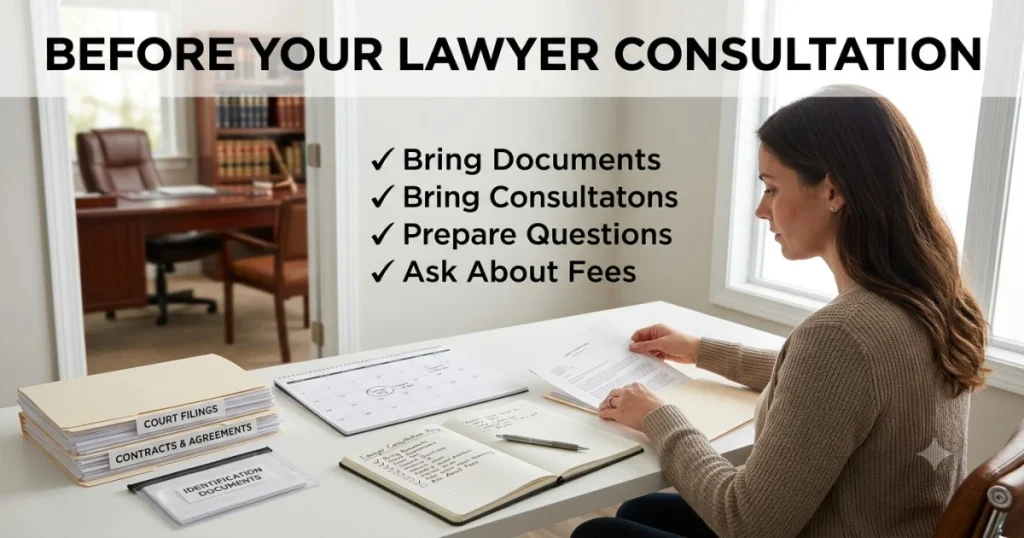
Good preparation can make your consultation much more useful.
Bring documents that are directly related to your legal issue, such as:
- Contracts
- Court papers
- Letters
- Emails
- Police reports
- Medical records
- Bills
- Insurance documents
- Employment records
- Property documents
- Relevant photographs
You do not need to bring every document you own.
Organize important materials in chronological order when possible. A simple timeline of events can also save valuable meeting time.
Prepare a List of Questions
Write down your questions before the appointment.
For example:
- What legal options might I have?
- What are the biggest risks?
- Are there important deadlines?
- What would you charge if I hire you?
- What expenses could I have in addition to attorney fees?
- Who would handle my case?
- What should I do next?
A consultation is much more valuable when you arrive prepared.
Lawyer Consultation Fees vs. Attorney Hourly Rates
These terms are related but not necessarily the same.
A consultation fee is what you pay for an initial meeting or legal discussion.
An hourly rate is what an attorney charges for legal work performed after or outside the consultation.
For example, a lawyer could charge $250 for an initial consultation and then charge $400 per hour if you decide to hire the firm.
Another attorney might offer a free 30-minute consultation but charge $350 per hour afterward.
Always ask for the complete fee structure rather than focusing only on the consultation price.
Other Ways Lawyers Charge Clients
The consultation is only one possible legal expense.
Hourly Billing
The lawyer charges for time spent working on your matter.
This may include:
- Phone calls
- Emails
- Legal research
- Drafting documents
- Negotiations
- Court appearances
- Meetings
Ask whether the attorney bills in specific time increments.
Flat Fees
A lawyer may charge one set amount for a defined service.
Flat fees are common for certain predictable legal services.
Before agreeing, find out exactly what the flat fee includes and what services would cost extra.
Contingency Fees
In some cases, an attorney may receive a percentage of money recovered for the client.
This arrangement is common in certain personal injury cases.
The agreement should explain the percentage and which expenses or costs may be deducted.
Retainers
Some lawyers require an upfront retainer before beginning work.
The retainer may be placed into a trust account and used to pay legal fees and expenses according to the fee agreement and applicable rules.
A retainer is not necessarily the final cost of your case.
Questions to Ask Before Paying a Consultation Fee
Before making an appointment, ask the law office for clear answers.
Consider asking:
- Is the initial consultation free?
- If not, exactly how much does it cost?
- How long will the consultation last?
- Is the fee refundable?
- Can the lawyer review documents before the meeting?
- Is document review included?
- Will I receive written advice?
- What is the hourly rate if I hire you?
- Is a retainer required?
- What additional expenses should I expect?
Getting the fee arrangement in writing is even better.
Common Mistakes People Make
Mistake 1: Choosing Only by Price
The cheapest consultation is not always the best option.
A lawyer with relevant experience may save you time and money by identifying an important issue early.
Mistake 2: Not Asking About Fees
Some people assume that an initial consultation is free.
Never rely on an assumption. Confirm the price before the appointment.
Mistake 3: Bringing Too Much Unorganized Information
A large pile of documents can make it harder to identify the important facts.
Instead, create a short timeline and separate the most relevant documents.
Mistake 4: Waiting Too Long
Some legal matters have strict deadlines.
If you believe you may have a legal problem, consider speaking with an attorney promptly rather than waiting until the deadline is close.
Mistake 5: Expecting a Guaranteed Outcome
No ethical attorney should promise a specific result simply because you paid for a consultation.
Be cautious of anyone guaranteeing that you will definitely win your case.
How to Reduce Your Legal Costs
You cannot always control the cost of legal work, but you can improve how efficiently you use your lawyer’s time.
Be Organized
Give the attorney a clear timeline and relevant documents.
Be Honest
Tell your lawyer the important facts, including facts that may seem unfavorable. Your attorney needs accurate information to give useful advice.
Use the Right Lawyer
Look for an attorney who regularly handles your type of legal issue.
Understand the Fee Agreement
Read the engagement or fee agreement before signing it.
Ask about anything you do not understand.
Avoid Unnecessary Communication
If your lawyer bills hourly, repeated calls and long emails can increase your bill.
Keep questions organized when practical.
How to Compare Lawyers
Price should be only one part of your decision.
| Factor | What to Consider |
|---|---|
| Experience | Does the lawyer handle similar matters? |
| Fees | Are charges clearly explained? |
| Communication | How will you communicate? |
| Availability | Can the lawyer realistically handle your matter? |
| Strategy | Does the proposed approach make sense? |
| Transparency | Are risks and costs explained clearly? |
| Comfort | Do you feel comfortable asking questions? |
A good attorney-client relationship requires communication and trust.
When You May Be Able to Get Free Legal Help
If you cannot afford a private attorney, you may have other options depending on your circumstances.
Possible sources include:
- Legal aid organizations
- Law school clinics
- Bar association referral programs
- Pro bono programs
- Court self-help resources
- Government or nonprofit legal assistance programs
Eligibility requirements vary.
Free or low-cost assistance may be limited, so it is important to check what services are actually available in your area.
Frequently Asked Questions
Is a consultation with a lawyer free?
Sometimes. Many attorneys offer free initial consultations, while others charge a fixed consultation fee or their regular hourly rate. Always confirm the fee before scheduling.
How long does a lawyer consultation usually last?
There is no universal length. Some consultations may take 15–30 minutes, while more detailed meetings can last an hour or longer.
Do lawyers charge for phone consultations?
Some do and some do not. Whether a phone consultation is free depends on the lawyer and type of legal matter.
Can I talk to several lawyers before choosing one?
Yes. Comparing attorneys can help you understand different approaches, experience levels, and fee structures. Just make sure you understand whether each consultation is free or paid.
Does paying for a consultation mean I have hired the lawyer?
Generally, no. A consultation and an attorney-client relationship are separate issues. Representation typically requires an agreement with the lawyer, although the exact rules and circumstances can vary.
Should I choose a lawyer based on the lowest consultation fee?
Not necessarily. The consultation price is only one factor. Relevant experience, communication, legal strategy, and the overall fee structure may matter much more.
What should I ask about lawyer fees?
Ask about the consultation fee, hourly rate or other billing method, retainer requirements, expenses, billing increments, and what services are included.
Pros and Cons of Paying for a Legal Consultation
Pros
- You receive professional legal guidance.
- You can better understand your options.
- You can identify potential risks and deadlines.
- You can decide whether hiring an attorney makes sense.
Cons
- The consultation may cost money.
- A short meeting may not resolve the entire issue.
- Additional legal work can create significant expenses.
- Different attorneys may give different strategic opinions.
Final Thoughts
So, how much is a lawyer consultation? In the United States, the answer can range from free to several hundred dollars or more, depending on the attorney, location, legal issue, and length of the meeting.
Do not choose an attorney based solely on the consultation price. Before scheduling, ask exactly what the consultation includes, how long it lasts, and what future legal services may cost.
Most importantly, arrive prepared. Bring relevant documents, create a short timeline, and write down your questions. A well-prepared consultation can help you understand your legal options and make a more informed decision about what to do next.
This article provides general educational information about legal consultation fees in the United States. It is not legal advice. Attorney fees and legal procedures vary by state, lawyer, and individual circumstances.