
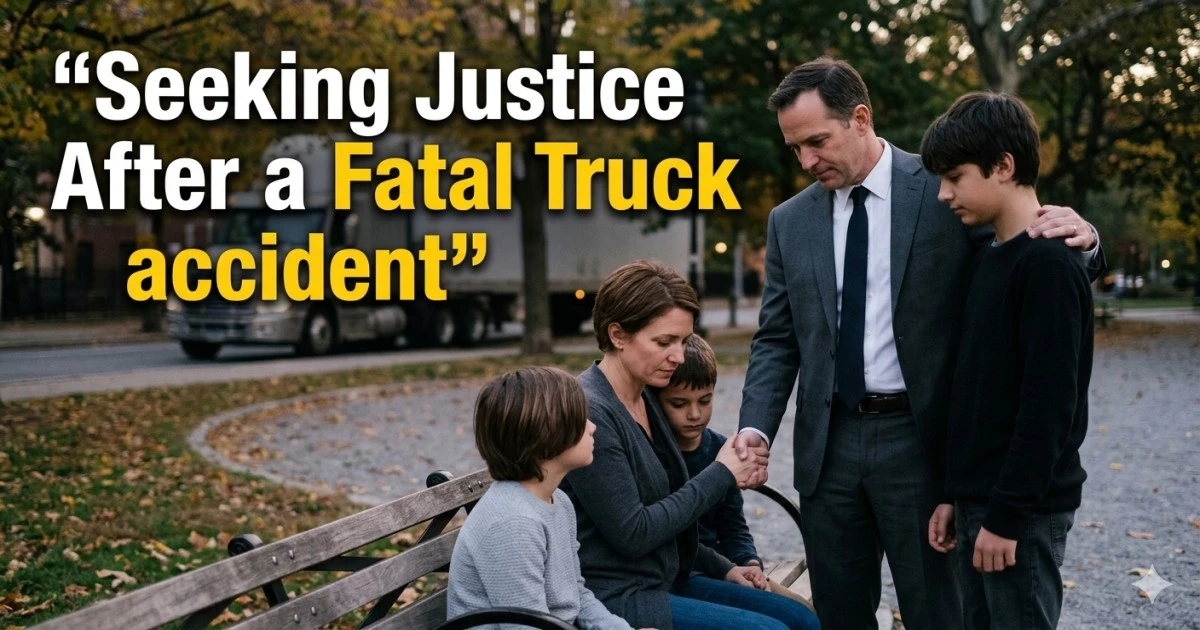
How a Fatal Truck Accident Lawyer Can Help Your Family Seek Justice
When a loved one dies in a truck crash, families face overwhelming grief, financial strain, and a confusing legal process. Questions arise about responsibility, especially since commercial trucks follow strict federal rules designed to prevent exactly these tragedies.
A fatal truck accident lawyer becomes essential. These attorneys understand FMCSA regulations (Federal Motor Carrier Safety Administration) and use violations of those rules to build strong wrongful death claims. They handle the investigation so you can focus on your family.
Why Truck Accidents Often Turn Fatal
Trucks and 18-wheelers dwarf passenger vehicles in size and weight. A violation of safety regulations can turn a minor error into a catastrophe. FMCSA exists specifically to reduce crashes, injuries, and fatalities involving large commercial vehicles through enforceable standards.
Key FMCSA Regulations That Protect Road Users
FMCSA rules, found in Title 49 of the Code of Federal Regulations (Parts 300-399), cover nearly every aspect of commercial trucking. In fatal accident cases, lawyers examine whether any of these were broken:
Hours of Service (HOS) Rules (49 CFR Part 395)
These limit driver fatigue, a major crash factor. For property-carrying drivers:
- Maximum 11 hours of driving after 10 consecutive hours off duty.
- No driving after 14 hours on duty (following 10 hours off).
- 30-minute break required after 8 cumulative hours of driving.
- Weekly limits: 60 hours in 7 days or 70 hours in 8 days.
Electronic Logging Devices (ELDs) track compliance automatically. Violations often involve falsifying logs, driving beyond limits, or skipping breaks.
Driver Qualification and Training (49 CFR Part 391)
Companies must verify drivers hold valid CDLs, meet medical standards, and have clean safety records. Hiring unqualified drivers or failing to train them properly can create liability.
Vehicle Maintenance and Inspection (49 CFR Part 396)
Trucks require regular inspections, proper brake and tire maintenance, and immediate repairs for defects. Companies must keep detailed records. Brake failures or bald tires from neglected maintenance frequently contribute to fatal crashes.
Drug and Alcohol Testing (49 CFR Part 382)
Mandatory pre-employment, random, and post-accident testing applies. Employers must test surviving drivers promptly after serious crashes.
Cargo Securement and Other Rules
Proper loading prevents shifts or rollovers. Additional standards cover lighting, tires, and hazardous materials.
A fatal truck accident lawyer obtains the truck’s black box data, ELD records, maintenance logs, and driver qualification files to uncover violations.
Common FMCSA Violations in Fatal Truck Accidents
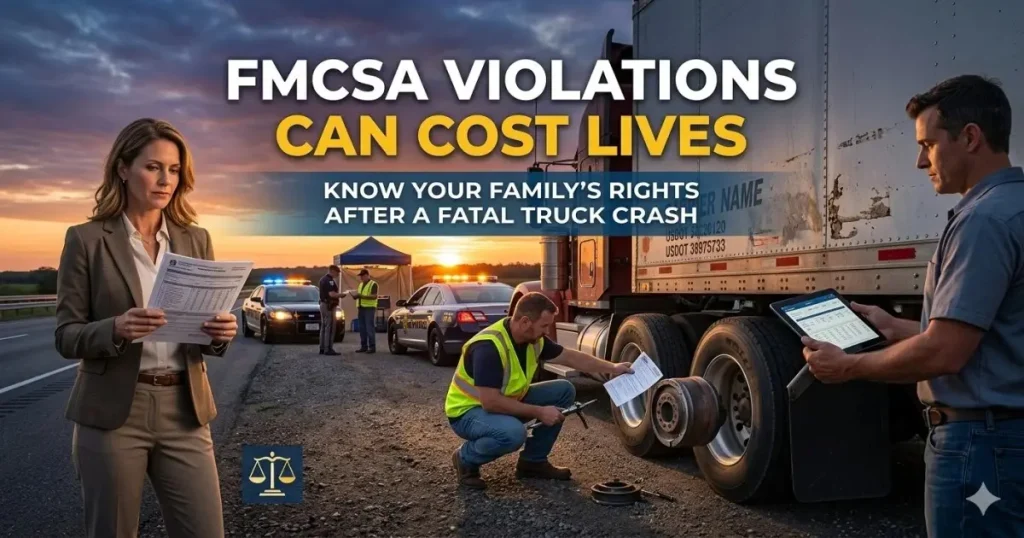
Many preventable deaths trace back to these breaches:
- Hours-of-service violations — Driving while exhausted.
- Inadequate vehicle maintenance — Especially brakes, tires, and steering.
- Falsified records or disabled ELDs.
- Hiring unqualified drivers with poor safety histories.
- Failure to conduct required pre-trip inspections.
- Speeding or distracted driving combined with regulatory non-compliance.
Real-world example: A trucking company pressures drivers to meet tight deadlines, leading to HOS violations. The fatigued driver causes a fatal rear-end collision. The company’s ignored maintenance logs and falsified logs strengthen the family’s claim significantly.
What a Fatal Truck Accident Lawyer Does with FMCSA Rules
These attorneys don’t just file claims—they build cases around regulatory violations:
- Send immediate preservation letters for ELD data, black box recordings, and documents.
- Work with accident reconstruction experts to link violations to the crash.
- Identify all responsible parties: driver, company, shipper, or manufacturer.
- Calculate full damages, including lost income and family support.
- Negotiate aggressively with insurers who defend big trucking operations.
- Prepare for trial when fair settlements aren’t offered.
FMCSA violations help prove negligence or even gross negligence, which can increase compensation.
Steps to Take After a Fatal Truck Crash
Act quickly—evidence like ELD data can be overwritten or altered:
- Request the official police report.
- Preserve any photos, videos, or witness information.
- Avoid direct contact with trucking insurers or investigators.
- Consult a fatal truck accident lawyer experienced in FMCSA cases immediately. Most work on contingency.
How to Choose the Right Fatal Truck Accident Lawyer
Seek someone who:
- Has specific experience with truck cases and FMCSA regulations.
- Demonstrates a strong track record of results against trucking companies.
- Has resources for experts and thorough investigations.
- Communicates clearly and compassionately.
Ask: “How many truck cases have you handled involving HOS or maintenance violations?” and “Are you prepared to take this to trial?”

Compensation in FMCSA Violation Cases
Successful claims often recover:
- Funeral and burial costs
- Lost future wages and benefits
- Medical expenses
- Loss of companionship and guidance
- Pain and suffering
- Possible punitive damages for willful violations
Truck Accidents vs. Regular Car Accidents
| Aspect | Regular Car Accident | Fatal Truck Accident with FMCSA Issues |
|---|---|---|
| Regulations | Mainly state laws | Federal FMCSA + state laws |
| Evidence | Basic police report | ELD data, black box, maintenance logs |
| Liable Parties | Usually 1-2 | Driver, company, others |
| Fatigue/Maintenance | Less central | Often central to proving negligence |
| Insurance | Personal policies | High commercial limits |
Expert Tips for Families Dealing with These Cases
- Request an “accident register” and compliance records from the carrier.
- Document all financial and emotional impacts.
- Prioritize your family’s healing—let the lawyer manage deadlines and stress.
- Understand your state’s statute of limitations for wrongful death (often 1-3 years, but act sooner for evidence).
- Watch for pressure tactics from insurers seeking quick, low settlements.
Common mistake: Assuming the crash was just “an accident” without checking for regulatory violations. Many cases reveal systemic company failures.
Frequently Asked Questions
What are the main FMCSA regulations in truck accident cases?
Hours of Service, vehicle maintenance, driver qualifications, and drug/alcohol testing are the most common.
Can an FMCSA violation help my wrongful death claim?
Yes. It provides clear evidence of negligence and can lead to higher compensation.
How long do trucking companies keep records?
They must retain many records (like ELD data and maintenance logs) for months or years, but act fast to preserve them.
What if the company claims the driver was independent?
The company may still be liable for safety oversight, hiring, and compliance failures.
Do all truck cases involve court?
Most settle, but strong FMCSA evidence improves negotiation power and trial readiness.
How much does a fatal truck accident lawyer cost?
No upfront fees in most contingency cases.
Where can I learn more about specific FMCSA rules?
The official FMCSA website offers summaries, though a lawyer interprets them for your case.
Finding Strength and Moving Forward
No amount of money can replace your loved one, but accountability through a strong legal case can provide financial security and a sense of justice. A knowledgeable fatal truck accident lawyer who understands FMCSA regulations stands beside your family, uncovers the truth, and fights for maximum compensation.
If you lost someone in a truck crash, reach out promptly for a free, confidential consultation. Early action preserves critical evidence and strengthens your position.
This article provides general information only and is not legal advice. Regulations and laws vary. Always consult a qualified fatal truck accident lawyer for guidance specific to your situation.