
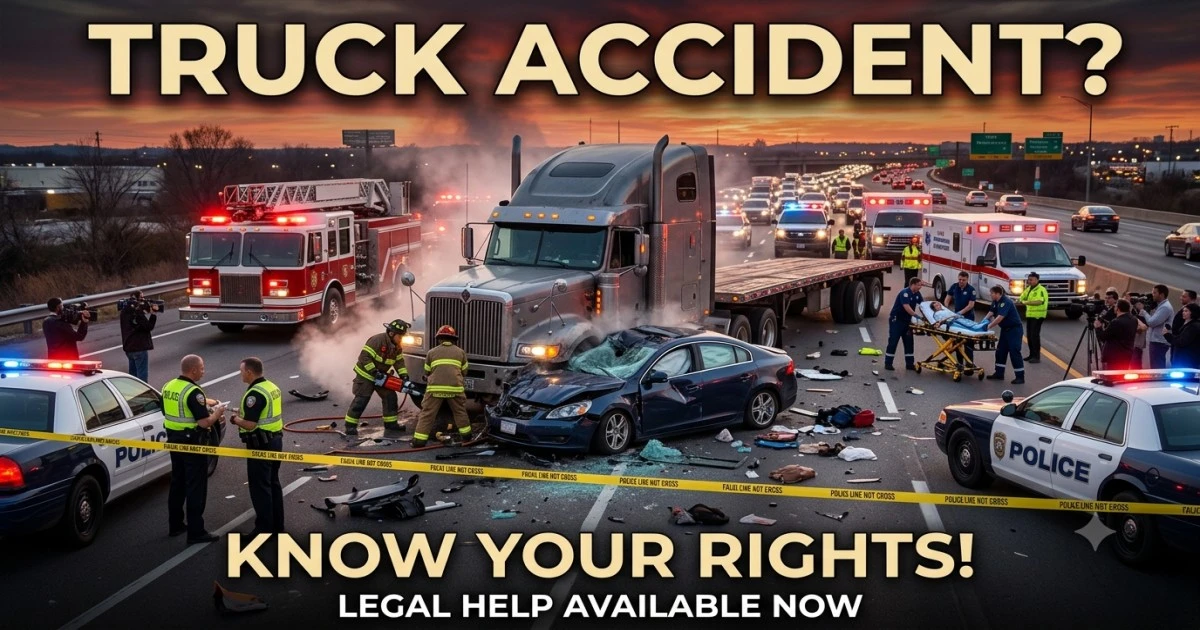
What To Do After a Truck Accident in the USA
If you’ve just been in a truck accident, your head is probably spinning. The impact from a massive semi-truck or commercial vehicle hits differently than a regular car crash. One moment you’re driving along, and the next, everything changes. I’ve seen this too many times in my years helping folks across the country deal with these situations. The good news? Taking the right steps right away can make a huge difference in your recovery and any claim you pursue.
This guide walks you through exactly what to do after a truck accident. We’ll cover safety first, documenting everything, getting medical help, handling insurance, and protecting your legal rights. Truck crashes often involve complex federal rules, big insurance companies, and serious injuries, so knowledge is your best tool. Let’s get into it so you feel prepared if it ever happens to you or someone you love.
Why Truck Accidents Are Different and More Serious
Large trucks weigh 80,000 pounds or more when fully loaded. That mass creates devastating force in a collision. According to safety data, thousands of people die or get injured every year in crashes involving large trucks. Most victims are in passenger vehicles—not the truck itself.
Common causes include truck driver fatigue, distracted driving, speeding, poor maintenance, or braking issues. Other drivers can contribute too, like cutting off a truck with limited visibility. Understanding this helps you see why quick, smart actions matter.
In my experience, people who act calmly and document thoroughly end up with stronger cases and better outcomes. Those who panic, say too much, or skip medical checks often regret it later.
Step 1: Ensure Immediate Safety at the Scene
Your first priority is getting out of harm’s way. Truck accidents often happen on busy highways where secondary crashes are a real risk.
- Turn on your hazard lights right away.
- If your vehicle is drivable and it’s safe, move it to the shoulder or a safe spot. Don’t block traffic more than necessary.
- Check yourself and passengers for injuries. Stay calm—adrenaline can mask pain.
- Set up flares or warning triangles if you have them and it’s safe. Many truckers carry these; ask if needed.
- Stay inside your vehicle if traffic is heavy and moving around feels dangerous.
Real-world example: I remember a client in Texas who was rear-ended by a semi on I-35. He wisely stayed in his car with hazards on until police arrived. A minute later, another vehicle nearly hit the wreckage. That small choice likely saved him from worse harm.
Warning: Never leave the scene unless you’re seeking immediate medical help. It could look like hit-and-run and hurt your case.
Call for Professional Help Immediately
Dial 911 as soon as possible, especially if anyone is hurt. Tell the operator it’s a truck accident involving a commercial vehicle. Provide location, number of vehicles, and injury details.
Police will create an official report, which is gold for insurance and legal claims. Paramedics can assess injuries on-site.
Even if the crash seems minor, call. Truck accidents can cause hidden damage or delayed symptoms. Many states require reporting accidents with certain damage or injury thresholds.
Expert tip: While waiting, breathe deeply. Shock is normal. Focus on facts when speaking to responders—avoid speculating about fault.
Document the Accident Scene Thoroughly
Evidence disappears fast. Take photos and videos with your phone before anything moves.
What to capture:
- All angles of damage to your vehicle and the truck.
- Skid marks, debris, road conditions, weather, and traffic signals.
- The truck’s license plate, DOT number, company name/logo, and trailer info.
- Injuries (with respect and consent).
- Positions of vehicles before they move.
- Any cargo spills or hazards.
Gather witness contacts: names, phones, what they saw. People often leave quickly.
Exchange information politely:
- Other driver’s full name, contact, driver’s license, insurance details, truck company info.
- Get the truck driver’s employer and insurance carrier specifics.
Common mistake to avoid: Admitting fault or apologizing. Statements like “I’m sorry” can be twisted later. Stick to “I need to speak with my insurance or a lawyer.”
Do not discuss details with the truck driver or company reps at the scene. Their goal is often to limit liability.
Seek Medical Attention Right Away—Even If You Feel Okay
Truck accidents frequently cause serious but not always obvious injuries. Adrenaline hides pain initially.
Go to the ER or see a doctor promptly. Documented medical records strengthen your claim and ensure proper treatment.
Common truck accident injuries:
- Traumatic Brain Injuries (TBI) and concussions: From impact or whiplash.
- Spinal cord and back injuries: Leading to chronic pain or paralysis.
- Broken bones and fractures: Often multiple in high-force crashes.
- Internal injuries and bleeding: Can be life-threatening if missed.
- Soft tissue damage, whiplash, burns, lacerations.
- Psychological effects like PTSD.
Follow all treatment plans. Skipping therapy or follow-ups gives insurance companies ammunition to undervalue your claim.
Warning: Delayed symptoms are common. Neck pain, headaches, dizziness, or fatigue can appear days later. Don’t tough it out—get checked.
In one case I handled, a woman felt “fine” after a sideswipe but developed severe back issues weeks later. Her early medical visit created the paper trail needed for full compensation.
Handling Insurance Claims After a Truck Accident
Notify your own insurance company soon, but be careful what you say. Provide basic facts only.
The trucking company’s insurer will likely contact you. They have teams working to minimize payouts. Do not give a recorded statement without a lawyer. They may ask leading questions to shift blame.
Trucking companies must carry high minimum liability insurance—often $750,000 or more federally, sometimes millions. This can mean larger potential settlements, but claims are more complex due to multiple parties (driver, company, maintenance providers, etc.).
Keep a claim journal: dates of calls, who you spoke with, medical visits, expenses, lost wages.
Practical advice: Save all bills, receipts, and correspondence. Track pain levels and daily impacts in a simple notebook or app.
The Importance of Hiring a Truck Accident Lawyer Early
Truck cases differ from regular car accidents. Federal Motor Carrier Safety Administration (FMCSA) rules apply. Evidence like electronic logging devices (ELDs), black box data, maintenance records, and driver logs must be preserved quickly.
A good lawyer sends preservation letters immediately to prevent data loss or destruction. They investigate negligence—fatigue violations, improper loading, brake failures, etc.
Benefits of legal help:
- Handles insurance negotiations so you don’t have to.
- Calculates full damages: medical, lost income, future care, pain and suffering.
- Identifies all liable parties for maximum recovery.
- Meets state deadlines (statutes of limitations vary, often 1-3 years).
Common mistake: Waiting too long or trying to handle it solo. Early attorney involvement preserves evidence and prevents lowball offers.
From experience, clients with lawyers recover significantly more than those who don’t.
Understanding Your Rights and Potential Compensation
You can seek damages for economic losses (bills, wages) and non-economic (pain, emotional distress). In severe cases, punitive damages if gross negligence occurred.
Average settlements vary widely—tens of thousands for minor cases to millions for catastrophic ones. Factors include injury severity, fault, and long-term impact.
Table: Typical Damage Categories in Truck Accident Claims
| Category | Examples | Why It Matters |
|---|---|---|
| Medical Expenses | ER visits, surgery, rehab, meds | Covers past and future care |
| Lost Wages | Missed work, reduced earning capacity | Protects income loss |
| Property Damage | Vehicle repair/replacement | Gets you back on the road |
| Pain & Suffering | Physical pain, emotional trauma | Compensates non-financial harm |
| Other | Home modifications, counseling | Addresses full life impact |
Common Types of Truck Accidents and Causes
- Rear-end collisions (trucks take longer to stop).
- Underride crashes (smaller car goes under trailer).
- Jackknife incidents.
- Rollover or sideswipe due to wide turns or wind.
- Fatigue-related (hours-of-service violations).
Driver error causes most, but companies can be liable too via “respondeat superior” if the driver was working.
Recovery and Long-Term Considerations
Healing takes time. Focus on physical therapy, follow medical advice, and consider support groups for PTSD.
Return to work gradually if possible. Document any accommodations needed.
Expert tip: Build a support network—family, counselors, your legal team. Isolation worsens recovery.
Pros and Cons of Pursuing a Truck Accident Claim
Pros:
- Access to substantial insurance coverage.
- Accountability for negligent parties.
- Financial relief for life-changing injuries.
- Improved safety standards industry-wide.
Cons:
- Time-consuming process (months to years).
- Emotional stress of reliving the event.
- Potential for disputes over fault.
- Need for strong evidence.
In most cases, the pros far outweigh the cons with proper guidance.
Prevention Tips for Safer Roads
While this guide focuses on after the fact, awareness helps:
- Maintain safe following distance from trucks.
- Avoid blind spots.
- Watch for wide turns or sudden stops.
- Stay alert to trucker fatigue signals (erratic driving).
FAQs About What To Do After A Truck Accident
Q1: Should I talk to the trucking company’s insurance adjuster?
No, not without a lawyer. They may record calls and use your words against you. Let professionals handle communications.
Q2: What if the truck driver blames me?
Fault is determined by evidence, not words at the scene. Police reports, photos, and witnesses help sort it. Comparative negligence rules in many states may reduce but not eliminate your recovery.
Q3: How long do I have to file a claim?
It varies by state—often 1 to 3 years from the accident date. Don’t delay; evidence fades.
Q4: Can I still claim if I wasn’t wearing a seatbelt?
Possibly, but it could affect the case. Focus on overall evidence of the truck driver’s or company’s negligence.
Q5: What if there are no witnesses?
Physical evidence, expert reconstruction, truck data, and medical records can still build a strong case.
Q6: Will my insurance rates go up?
Not if you’re not at fault. Provide proof to your insurer.
Q7: How much is my case worth?
It depends on specifics. Consult a lawyer for a realistic evaluation based on your injuries and losses.
Conclusion: Take Action and Prioritize Your Recovery
A truck accident turns your world upside down, but you don’t have to navigate it alone. Prioritize safety, medical care, and documentation. Then, get experienced help to handle the rest.
If you’ve been in a truck accident, reach out to a qualified personal injury attorney in your area for a free consultation. They can review your situation and guide next steps. Recovery is possible—many people rebuild stronger with the right support.
Stay safe out there. Drive defensively, especially around big rigs. If this happened to you, know that taking informed steps now sets you up for the best possible outcome tomorrow.